
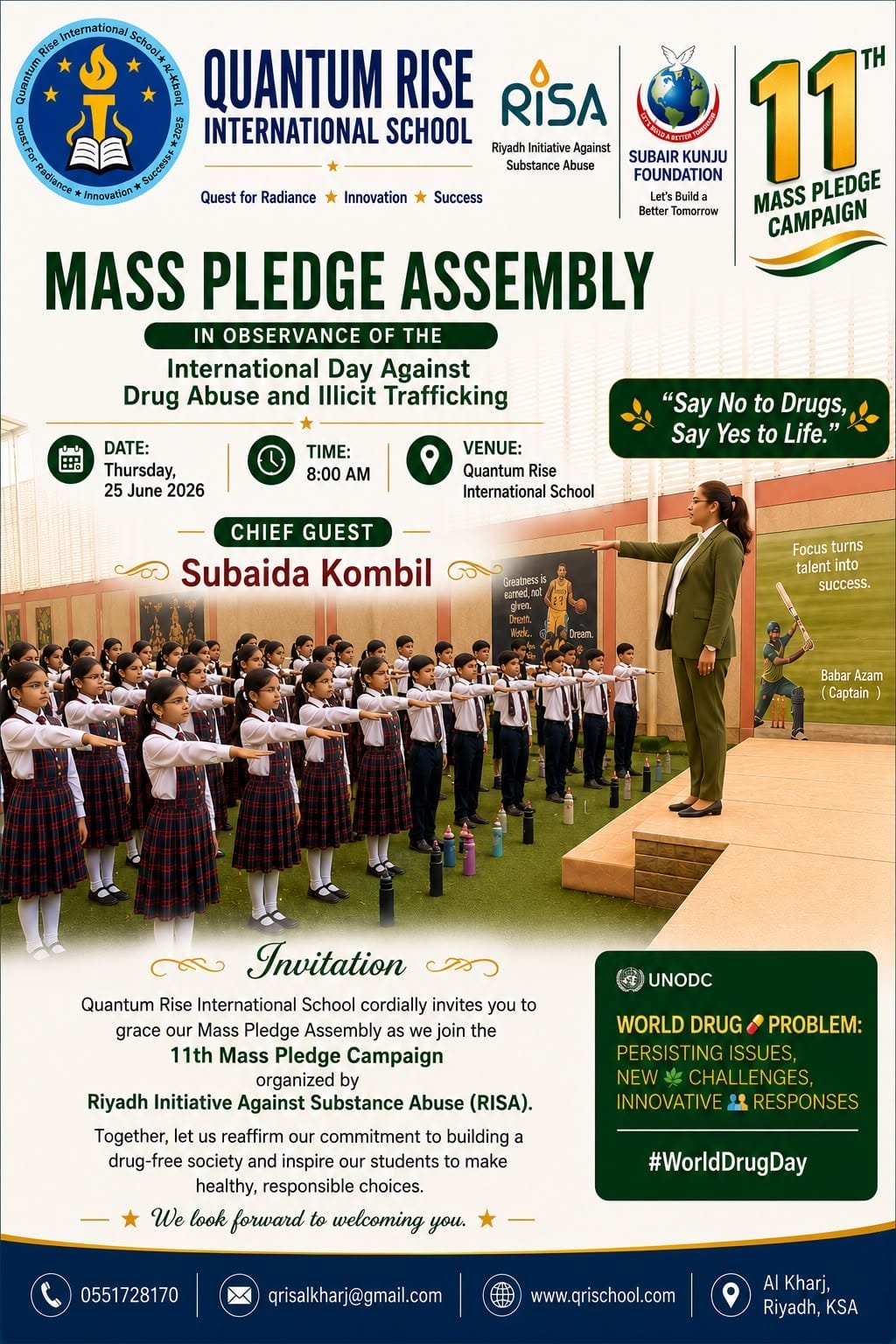
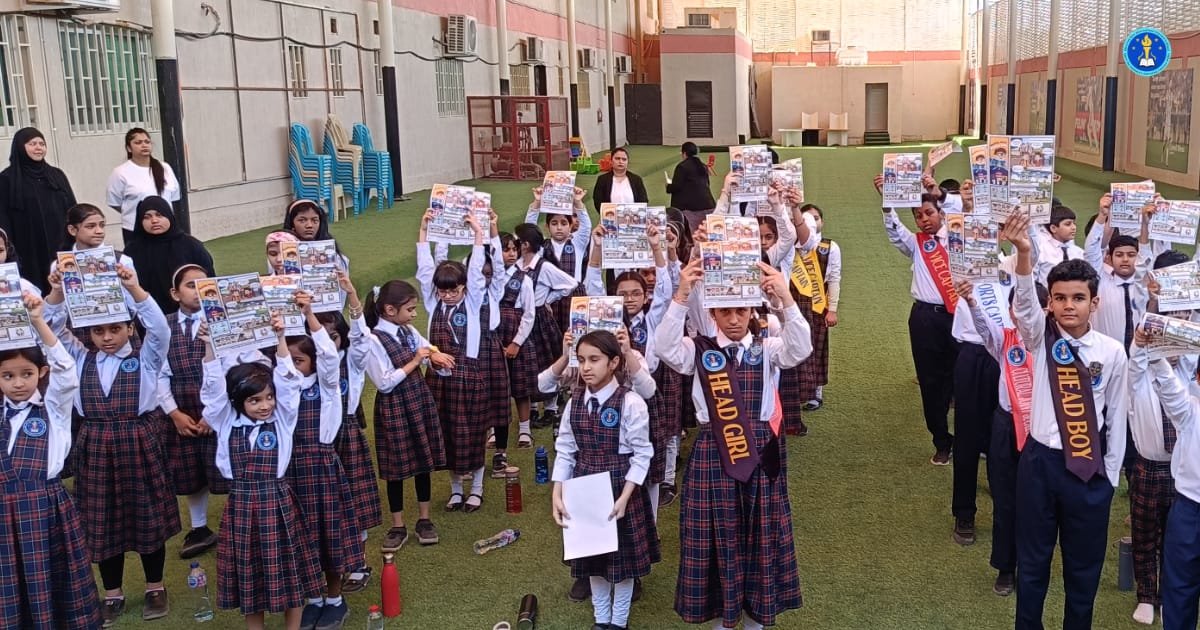
The grounds were quiet at 8:00 a.m. last Thursday, just before rows of students lined up in formation, right arms extended in a single, deliberate gesture. Within minutes, that quiet gave way to something louder: hundreds of young voices reciting a pledge together, the kind of moment that’s hard to script and easy to remember.
That was the scene at Quantum Rise International School’s Mass Pledge Assembly, held in observance of the International Day Against Drug Abuse and Illicit Trafficking. The event marked the school’s participation in the 11th Mass Pledge Campaign, an initiative organized by the Riyadh Initiative Against Substance Abuse (RISA) in partnership with the Subair Kunju Foundation.
The Stage Belonged to the Staff First
What stood out wasn’t the banner or the microphone setup. It was who took the pledge first. Before a single student raised an arm, the entire teaching staff stood in a line across the stage – dozens of teachers in matching black blazers, arms extended toward the audience of children below, reciting the same pledge their students would repeat minutes later. A young boy near the front pointed back at them, arm raised in mirrored salute, as if checking that he was doing it right.
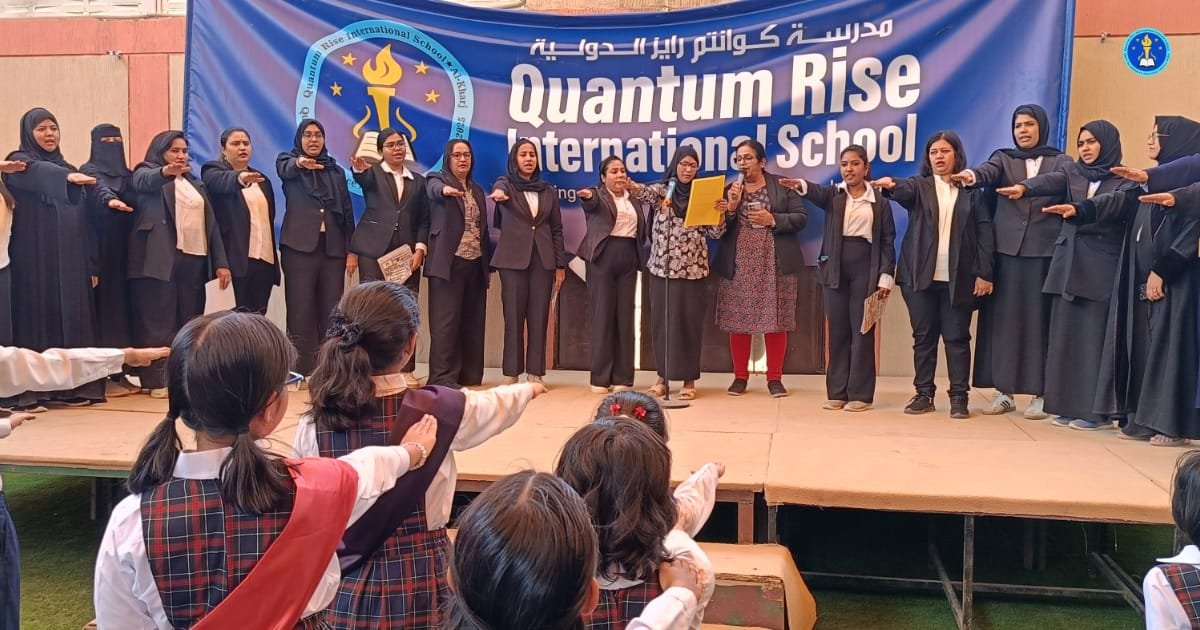
That sequencing wasn’t incidental. Asking adults to commit publicly, in front of the children they teach, before asking children to commit themselves, sends a different message than a poster on a wall ever could.
Why a Pledge, and Why Now
Assemblies like this one can feel performative if they stop at the photo opportunity. The harder question is what a ten-second pledge is supposed to accomplish for a child who won’t face a real decision about substance use for years, if ever, during their school life. The honest answer: probably not much, on its own. A single morning rarely changes behaviour. What it can do, more reliably, is normalize a vocabulary – words like “stay focused,” “stay connected,” “stay positive” – well before those words are tested by circumstance.
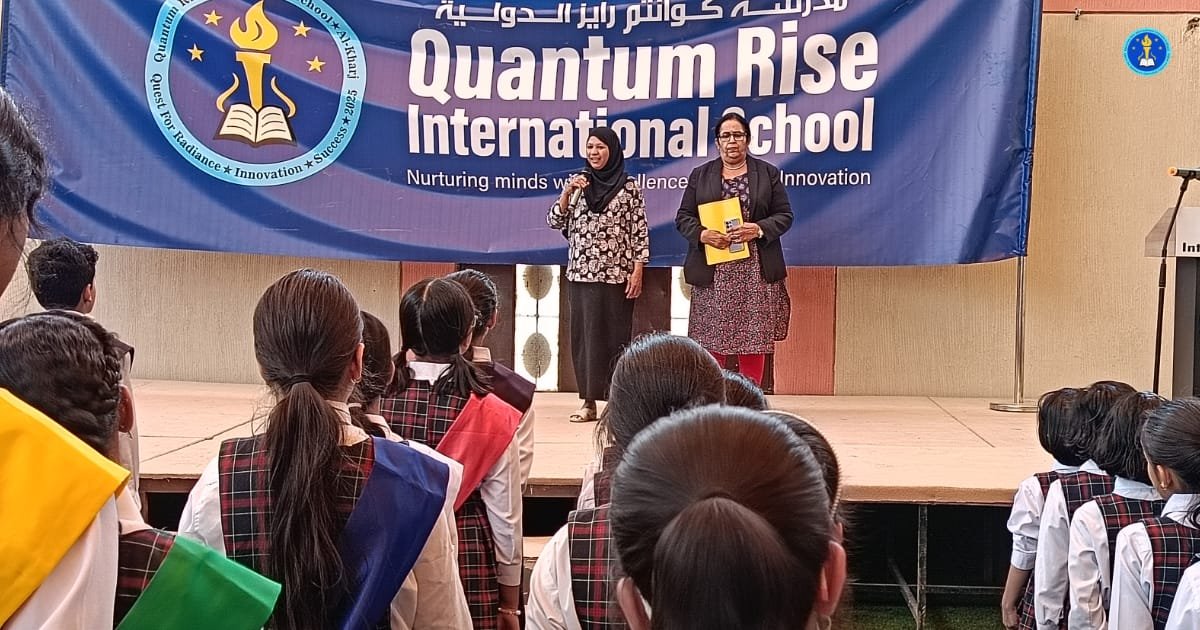
That’s the logic behind campaigns like RISA’s. Repetition across schools, across years, building familiarity rather than fear. Whether it works long-term isn’t something any single school can measure from one assembly. What can be observed is more immediate: who showed up, what was said, and how seriously the room treated it.
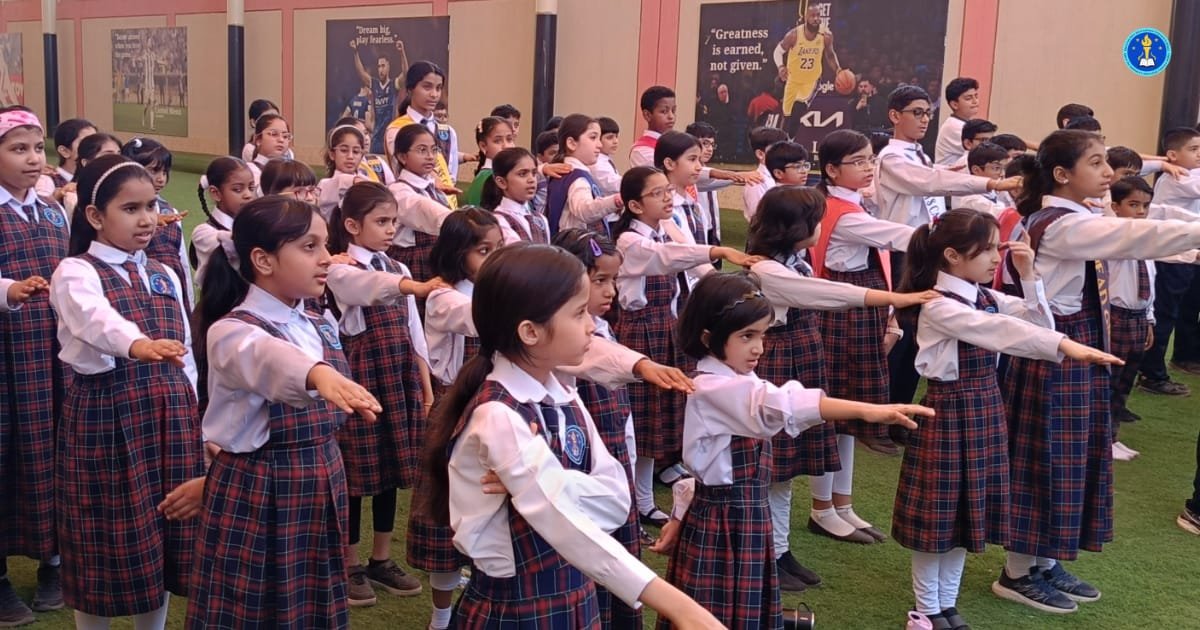
The event also tied into the school’s broader four-part framework for the day – stay active, stay focused, stay connected, stay positive – language meant to give students something concrete to hold onto rather than an abstract warning. “Move your body, power your mind” sits differently with a seven-year-old than “substance abuse prevention” does, and the difference matters when the audience spans kindergarten through Grade 6.
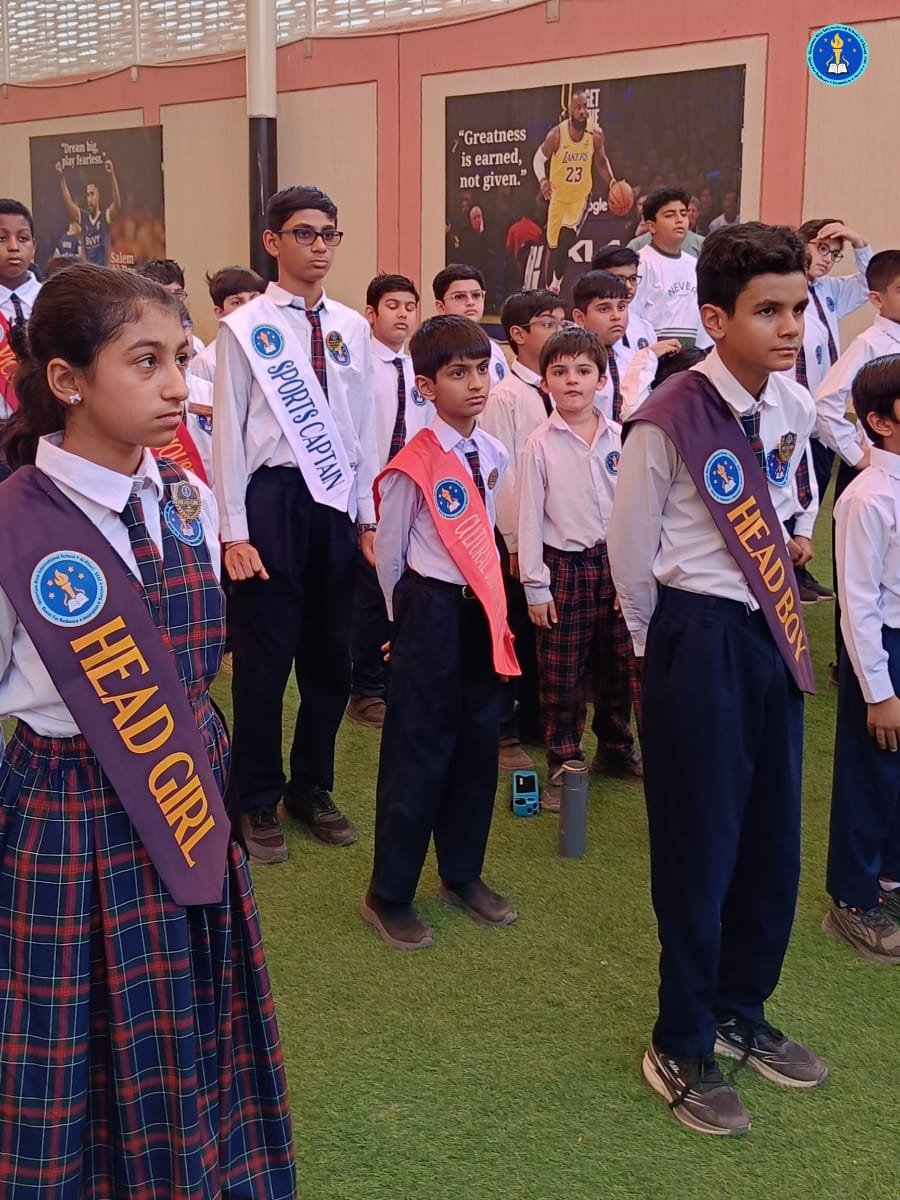
A Comic Book Did More Talking Than a Lecture Would Have
Each student left holding a printed comic strip – part of RISA’s “Healthy Mind, Happy Life” series – featuring a caped, masked mascot and a storyline that felt closer to a playground conversation than a public health pamphlet. One panel showed a boy refusing a cigarette from a friend with the line “Bro, let’s not fall into that snare,” followed by a classmate pushing back: “Bruh, why don’t we try it once?”
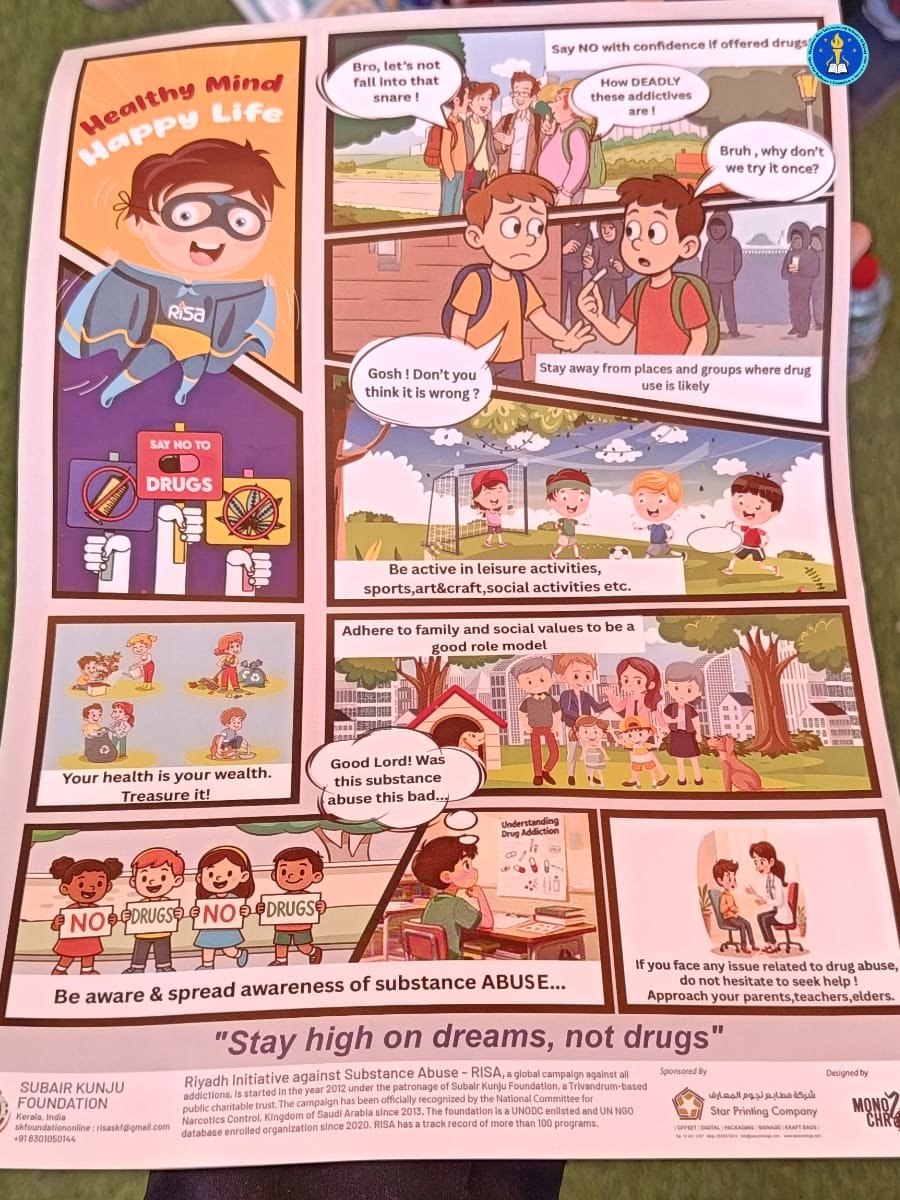
It’s an unusual choice, putting peer pressure dialogue directly into a child’s hands rather than describing it to them secondhand. The comic didn’t moralize from a distance. It let two cartoon teenagers have the exact argument a real teenager might have, then let the reader decide which voice to listen to.
Other panels were quieter: children picking up litter, a multi-generational family gathered under a tree, a single panel reading simply, “Your health is your wealth. Treasure it.” The strip ended with a tagline that students were still repeating as they walked back toward their classrooms afterward – “Stay high on dreams, not drugs.”
Continuing the Conversation at Home
Parents may find their child mentioning the pledge, the sashes, or the visiting guest over the next few days – often in fragments rather than full explanations, since that’s typically how children report school events. A simple follow-up question, asked without pressure, usually opens more than a direct one does: “What did you do at assembly?” tends to get further than “Did you learn about staying away from drugs?”
For families wanting to extend the conversation, the four themes from the day – staying active, focused, connected, and positive – translate fairly naturally into everyday language: a walk after dinner, a few minutes of undistracted attention, time with cousins or neighbours. None of it requires mentioning the word “drugs” directly, particularly for younger children for whom the concept is still abstract.
Events like this work best as one thread among many – home conversations, classroom discussions, community partnerships like the one with RISA – rather than a single inoculating moment. Thursday’s assembly was one thread. The rest gets woven in gradually, at home and in classrooms, long after the sashes are folded away.