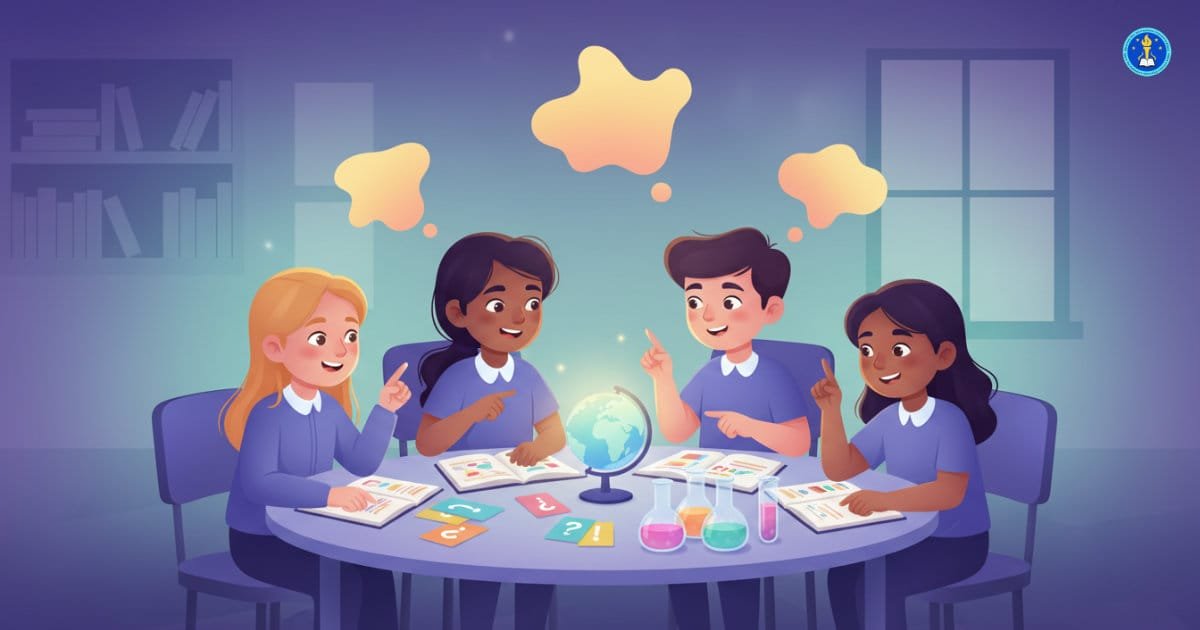
Last week, during our Eid celebration, I watched Aisha carefully explain to her Filipino classmate how her family prepares for the holiday. “We wake up really early for prayers, then we visit our grandparents and get money in envelopes – but not like Chinese New Year money, different.” Her friend nodded thoughtfully, then shared about Simbang Gabi. Two six-year-olds, building bridges across cultures through shared stories of family tradition.
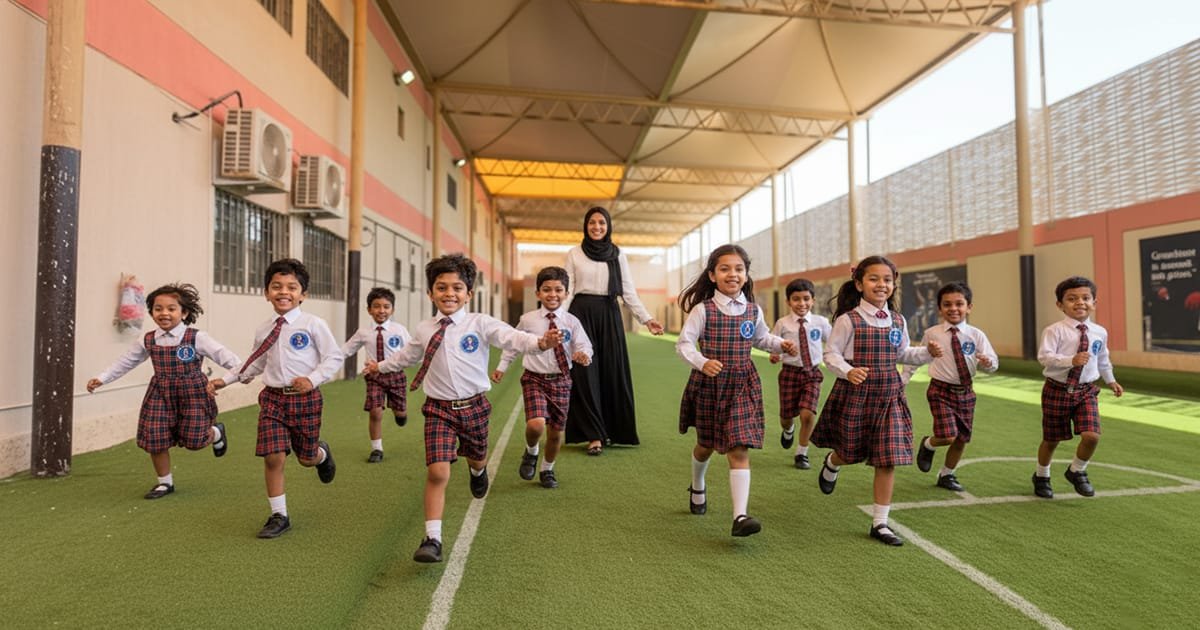
Al Kharj’s international community creates classrooms where Saudi, Indian, Filipino, Pakistani, and other children learn together daily. This diversity isn’t a challenge to manage – it’s an asset that shapes how children understand the world. But it requires intentionality. Multicultural classrooms don’t automatically produce culturally aware children; they create opportunity that schools must actively cultivate.
What Cultural Diversity Actually Teaches
When children encounter peers whose home languages, religious practices, and family structures differ from their own, they learn that variation is normal rather than threatening. A child who’s only known families like their own might assume everyone celebrates the same holidays, eats similar food, and lives by identical rules. Diverse classrooms reveal that normal varies widely – and that difference doesn’t require judgment.
This learning happens naturally through daily proximity. Children notice that some classmates bring chapati for lunch while others have rice and adobo. They observe that certain peers leave school early on Fridays, while others celebrate different weekend days. They hear multiple languages spoken during pickup time. These observations accumulate into understanding that the world contains more variety than any single household demonstrates.
However, exposure alone doesn’t guarantee empathy or respect. Without adult guidance, children might mock unfamiliar foods, exclude peers who speak different languages at home, or treat cultural practices as strange rather than simply different. The classroom’s role is transforming proximity into genuine appreciation rather than allowing diversity to create division.
Making Cultural Learning Explicit
We don’t assume children will automatically develop cultural awareness through passive exposure. Instead, we build cultural learning into curriculum deliberately.
During social studies lessons, we study multiple cultural perspectives on similar themes. When discussing family structures, we examine extended families common in South Asian cultures, nuclear families prevalent in some Western contexts, and multi-generational households typical in many Saudi families. Students interview their own families about traditions, then share findings with classmates. This positions every family’s practices as valuable data rather than treating any single approach as standard against which others are measured.
Language becomes a classroom resource rather than a barrier. We label items in the classroom using multiple languages – English, Arabic, Hindi, Malayalam – so children see their home languages valued in school space. When students use their mother tongue during free time, we don’t suppress it as disruption but acknowledge it as natural communication. Bilingualism and multilingualism are presented as cognitive assets, not deficits requiring correction.
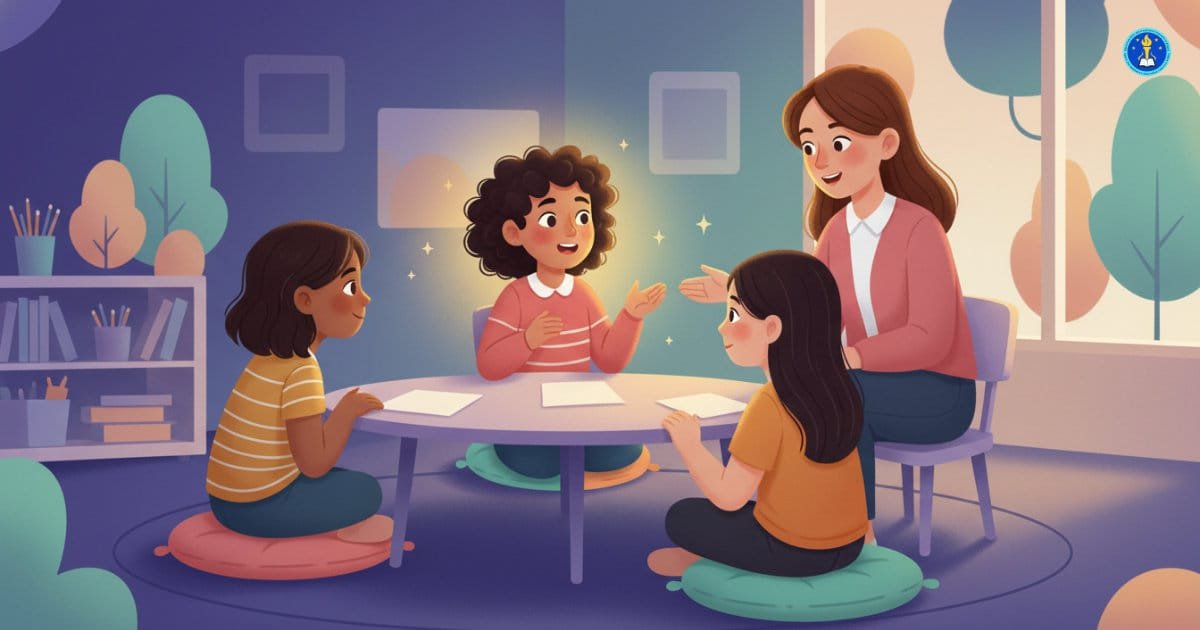
We also celebrate cultural events authentically rather than superficially. Instead of decorating for Diwali with paper lanterns and moving on, we invite families to share how they actually celebrate – what prayers are said, what foods are prepared, why certain rituals matter. Students from that cultural background become teachers, explaining practices to peers who then ask thoughtful questions. This approach treats culture as lived experience rather than exotic performance.
Navigating Religious Diversity Respectfully
Al Kharj’s demographic reality means Islamic practices shape school rhythms – prayer times, Ramadan schedules, Friday worship. We maintain this structure while ensuring children of other faiths feel equally respected, not tolerated as exceptions to a religious norm.
We teach about multiple religious traditions factually without promoting any particular faith. When studying celebrations, we present Eid, Diwali, Christmas, and other holidays as equally significant to the families observing them. We use neutral language: “Muslims believe,” “Hindus practice,” “Christians celebrate” – presenting each tradition as one among many valid approaches to spirituality rather than framing one as correct and others as alternatives.
During Ramadan, we adjust snack times and explain why some students aren’t eating during daylight hours. This teaches all children about fasting practices while ensuring fasting students aren’t inadvertently excluded from classroom community. Non-Muslim students learn respect for religious observance; Muslim students experience their practices normalized rather than hidden.
We also address questions about religious differences honestly when they arise. “Why does Fatima pray differently than I do?” receives a straightforward answer: “Different religions have different prayer practices. Your family prays in their tradition, and Fatima’s family prays in theirs. Both are important to the people practicing them.” This validates both practices without suggesting either is superior.
Teaching Children to Navigate Cultural Difference
Beyond celebrating diversity, we teach practical skills for interacting across cultural boundaries – skills children will need throughout their lives in our interconnected world.
We model and practice asking respectful questions. “I noticed you don’t eat pork. Can you tell me why?” is appropriate curiosity. “That’s weird that you don’t eat pork” is judgment masquerading as observation. Children learn that noticing difference is natural, but responses to difference reflect character. Curiosity with respect builds connection; mockery or dismissal creates division.
We also teach that cultural practices have reasons, even when those reasons aren’t immediately obvious to outsiders. When a child questions why classmates remove shoes before entering certain spaces, we explain cultural norms around cleanliness and respect rather than dismissing the practice as arbitrary. Understanding that behaviors have cultural logic – even when different from our own – builds empathy.
Students practice perspective-taking through role-playing and storytelling. “Imagine you moved to a country where no one spoke your language or knew your traditions. How would you want classmates to treat you?” This framework helps children connect cultural empathy to their own experiences of being new or different in any context.
When Cultural Values Conflict
Occasionally, cultural values genuinely conflict rather than simply differing. How do we handle situations where one family’s deeply held belief contradicts another’s?
We distinguish between cultural practices that can coexist and values requiring school-wide standards. Dietary restrictions, clothing choices, prayer practices, language preferences – these can all coexist in one classroom without anyone compromising their values. Students learn to respect that classmates make different choices without needing to adopt those choices themselves.
However, certain values don’t coexist – they require choosing. If a family’s cultural tradition includes corporal punishment but the school prohibits it, the school’s policy prevails in school contexts. If cultural gender norms would limit girls’ participation in activities, the school’s equity commitment overrides. We’re transparent about this: “In school, all students participate in all activities regardless of gender. Your family may have different rules at home, and that’s between you and your parents. But here, everyone participates.”
This isn’t cultural imperialism – it’s establishing baseline standards that allow diverse children to learn together safely. We explain these boundaries clearly to all families during enrollment so expectations are transparent from the start.
Supporting Children’s Cultural Identity Development
Multicultural classrooms can sometimes leave children confused about their own cultural identity, especially when they’re part of a minority within the school. We work actively to help children feel confident in their heritage while respecting others.
We encourage families to share cultural artifacts, stories, and traditions with the class. A child whose cultural background differs from most classmates needs to see their heritage valued, not erased in favor of majority culture. When everyone learns about each other’s traditions, no single culture becomes the assumed default.
We also validate children’s complex identities. Many students in Al Kharj are third-culture kids – born in Saudi Arabia to Indian parents, or Filipino children growing up speaking English and Arabic more than Tagalog. These children navigate multiple cultural frameworks daily. We acknowledge this complexity rather than forcing them to choose a single primary identity. “You can be Saudi and Indian,” we tell them. “You can love both places and belong to both cultures.”
What Parents Can Do at Home
Cultural learning happens most powerfully when school and home reinforce similar messages. At home, parents shape how children interpret the diversity they encounter at school.
Talk positively about your child’s classmates from different backgrounds. If your child mentions a friend with different cultural practices, respond with interest rather than judgment. “That’s interesting – different families have different traditions. What did you find most interesting about what Maya shared?” This models curiosity and respect.
Avoid speaking negatively about other cultures or religions within children’s hearing. Young children absorb parental attitudes quickly, and casual dismissive comments about other groups teach prejudice even when parents don’t intend that lesson. If you have concerns about cultural practices, discuss them with adults away from children’s ears.
Seek out opportunities for your child to experience cultural diversity beyond school. Visit restaurants serving cuisine from classmates’ cultures. Attend public cultural celebrations. Read books featuring characters from varied backgrounds. These experiences reinforce that diversity extends beyond the classroom into the wider world.
Also maintain your own cultural traditions proudly. Children need strong roots in their own heritage to confidently engage with others’ traditions. Teach your home language, observe your religious practices, prepare traditional foods, share family stories. Cultural confidence isn’t threatened by diversity – insecurity is. Children secure in their own identity can appreciate others’ without feeling undermined.
The Long-Term Gift of Cultural Awareness
Children growing up in multicultural classrooms develop skills that matter increasingly in our globalized world. They learn to work collaboratively with people who think differently, communicate across language barriers, navigate unfamiliar social norms, and find common ground despite surface differences.
They also develop more sophisticated thinking generally. Research shows that multicultural experiences enhance creative problem-solving, flexible thinking, and perspective-taking – skills valuable far beyond cultural contexts. Children accustomed to considering multiple viewpoints naturally apply that skill to academic problems, social challenges, and eventually professional situations.
Perhaps most importantly, they learn that difference doesn’t require hierarchy. The instinct to rank everything – which language is best, which religion is true, which cultural approach is superior – weakens when children experience multiple valid approaches coexisting respectfully. They learn that different can simply mean different, not better or worse.
This learning happens gradually through thousands of small interactions – sharing lunch, playing together, asking respectful questions, celebrating each other’s festivals. No single lesson accomplishes it. But over years, children who learn alongside diverse peers develop worldviews that embrace complexity rather than demanding uniformity. In our increasingly interconnected world, that might be the most valuable education we can provide.