Have you ever watched a child tie their shoes for the first time without asking for help? The concentration is intense – tongue between teeth, fingers fumbling, several failed attempts before success. Then: pride. Not because an adult praised them, but because they solved it themselves.
That moment reveals something essential about learning. Independence isn’t a personality trait children either possess or lack. It’s a skill built through hundreds of small opportunities to figure things out, make choices, and experience the satisfaction of managing tasks without constant adult direction.
What Independence Actually Means
When educators talk about independent learners, we don’t mean children who work entirely alone or never ask for help. We mean students who can start tasks without waiting for detailed instructions, who try strategies when stuck before immediately seeking rescue, and who take ownership of their learning process rather than viewing it as something done to them.
This develops gradually through specific, repeated practices – not grand gestures, but small daily habits that accumulate over years. A seven-year-old who independently checks their homework folder each afternoon is building the same executive function skills they’ll need at seventeen to manage university applications. The habits scale up; the foundation stays consistent.
Morning Routines Without Micromanagement
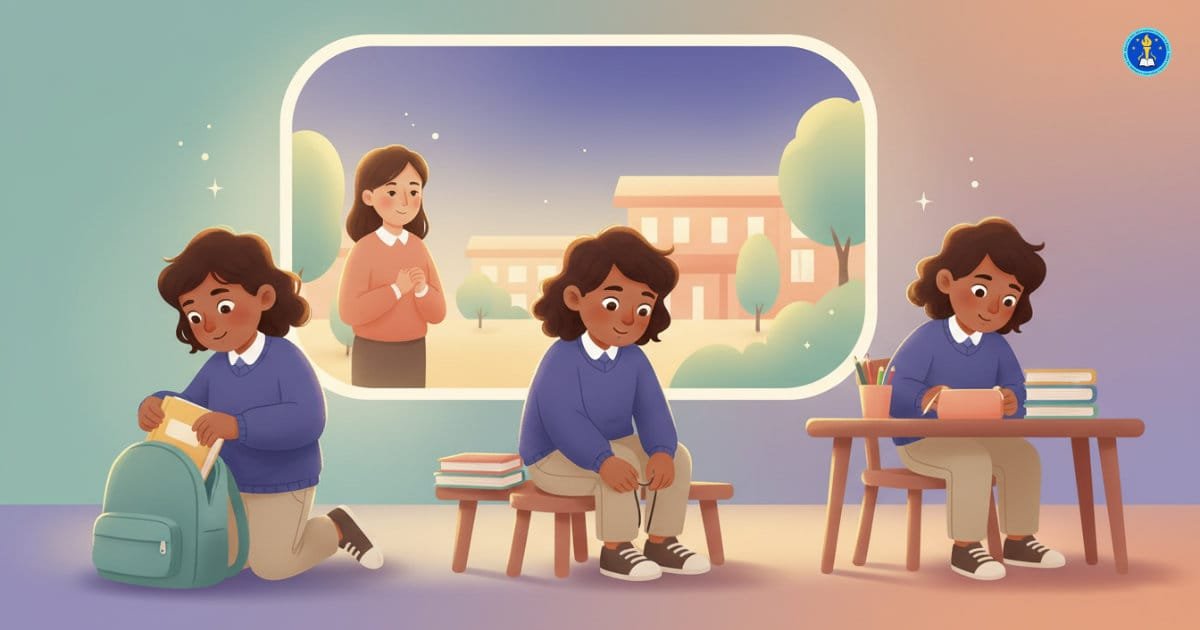
Morning independence starts with predictable sequences and minimal parental narration. Instead of directing every step – “Now brush your teeth. Did you brush your teeth? Go brush your teeth” – establish a visual routine chart showing the sequence: bathroom, dressed, breakfast, backpack, shoes.
Initially, you’ll guide this sequence. Within weeks, most children internalize it. Your role shifts from director to observer, intervening only when they’re genuinely stuck or running late. This doesn’t mean ignoring them; it means trusting them to execute a learned routine while you prepare your own day nearby.
When children forget steps, resist immediately correcting. “You’re heading to the car. Check your routine chart – did you complete everything?” This prompts self-checking rather than dependence on your memory. Sometimes they’ll leave without their water bottle. Natural consequences teach effectively; they remember tomorrow.
Timing matters too. If your child needs forty minutes for morning routine, start the process fifty minutes before departure. The extra ten minutes creates space for independence without panic. Rushed mornings require adult direction; calm mornings permit children to lead their own preparation.
Homework: Scaffolding Toward Self-Management
Homework independence develops in stages, not overnight. Primary school children shouldn’t manage homework entirely alone initially, but they can learn specific self-management skills within supportive structure.
Start with consistent homework time and location. Same time daily, same quiet space, materials already available. Consistency removes decision-making burden, letting children focus on the work itself. Initially, sit nearby while they work – not hovering, but available when they’re stuck.
Teach checking skills explicitly. Before your child declares homework finished, ask: “Did you reread the instructions to verify you completed everything?” “Did you check your answers make sense?” “Is your name on every page?” You’re not checking for them; you’re teaching the checking process.
When they’re stuck, resist immediately solving problems. Ask: “What part is confusing?” “What have you tried already?” “Where could you look to find information?” Sometimes the answer is “I don’t know” – that’s acceptable. But often, prompting helps children access knowledge they possess but haven’t yet applied.
Gradually reduce proximity. If you’ve been sitting beside them for weeks, move across the room. Then to the next room, checking in every fifteen minutes. Eventually they work independently, coming to you only when genuinely stuck. This progression might take months or years depending on the child’s age and temperament. That’s normal.
Choice Within Boundaries
Independence requires practice making decisions. But unlimited choice overwhelms children; they need boundaries that make decision-making manageable.
Offer constrained choices throughout the day. “Do you want to read or draw after homework?” “Should we review math first or spelling?” “Would you like apple slices or carrots with lunch?” These aren’t major decisions, but each small choice builds decision-making muscles and investment in outcomes.
Let children experience consequences of choices when safe to do so. If they choose to play before packing their school bag and then can’t find their library book at bedtime, that’s frustrating – and educational. Don’t rush to solve it. Empathize: “That’s disappointing. What could you do differently tomorrow?” They learn that choices have outcomes they must manage.
Avoid rescuing children from minor inconveniences they could prevent. Forgot your jacket? You’ll be cold at recess – remember it tomorrow. Didn’t finish breakfast because you dawdled? You’ll be hungry before snack time. These aren’t cruelties; they’re information that informs future decisions. Obviously intervene for genuinely serious consequences, but minor discomfort teaches effectively.
Problem-Solving Before Help-Seeking
Many children’s first response to difficulty is calling for adult help. This is understandable – adults solve things quickly. But it prevents children from developing their own problem-solving capacity.
Establish a “try three things” expectation. When your child asks for help, respond: “What three things could you try first?” Common strategies include: reread instructions, look for similar examples, try a different approach, check reference materials, take a short break and return.
Initially you might suggest these strategies. Gradually, children internalize them and apply without prompting. The goal isn’t that they never ask for help – it’s that they attempt independent problem-solving first and can articulate what they’ve already tried when they do seek assistance.
When you do help, scaffold rather than solve. If they’re stuck on a math problem, don’t work it for them. Instead: “Show me what you’ve done so far. What does the question ask you to find? What operation might work here?” Guide their thinking process without replacing it.
Celebrate effort and strategy, not just correct answers. “I noticed you tried three different approaches before asking for help – that’s strong problem-solving” teaches that persistence matters. “You got it right!” alone doesn’t teach the process that leads to correct answers.
Reading Independence
Reading independence develops when children learn to sustain attention through books without adult entertainment. This doesn’t mean ending read-aloud time – that remains valuable – but it does mean creating daily independent reading time.
Start with short durations. Even ten minutes of sustained silent reading builds stamina. Use a timer so children know when the period ends; this removes the temptation to ask repeatedly how much longer.
Let children choose books at their comfort level during independent reading time. This isn’t practice for improving reading skill necessarily – it’s practice for reading as an enjoyable, self-directed activity. A child who chooses books slightly below their capability and reads happily for twenty minutes is building better reading habits than one forced into challenging texts who gives up after five minutes.
Create a specific reading space with good lighting and minimal distractions. Some children prefer curling up on cushions; others want a desk. Let them establish what helps them focus, then maintain that routine consistently.
Organization Systems Children Can Manage
You can’t expect children to be organized if organization systems are too complex for their developmental level. Simple, visual systems work; elaborate filing schemes don’t.
For school materials, use one folder per subject with a consistent color code. Math is always blue, language always red – whatever system you choose, keep it constant. This makes finding materials intuitive rather than requiring memory.
Establish a homework station with all necessary supplies: pencils, eraser, ruler, crayons, paper. Children shouldn’t need to hunt for basic materials mid-task; this creates dependence on adults to locate items.
Use checklists for recurring responsibilities. A morning checklist, after-school checklist, and bedtime checklist remove the burden of remembering sequences. Initially you’ll prompt children to consult the list; eventually they do so automatically.
Weekly planning develops gradually. By Grade 4 or 5, some children can manage a simple weekly planner showing homework due dates and test schedules. Younger children aren’t developmentally ready for week-long planning; they manage day-by-day better.
When to Step Back and When to Support
Parents often ask: how much struggle is productive, and when does it become discouraging? There’s no precise answer, but watch for these signals.
Step back when: your child is frustrated but still trying, asking questions but not demanding you solve things, taking longer than you’d prefer but making progress, making mistakes they could catch themselves with prompting.
Step in when: frustration escalates to tears or shutdown, they’ve tried multiple strategies genuinely and remain stuck, the task is developmentally inappropriate, time pressure means struggle isn’t productive learning.
The goal isn’t perfect independence immediately. It’s gradual skill-building over years. A Grade 1 student who can get ready for school independently is ahead developmentally of a Grade 4 student whose parent still selects their clothing daily. Age matters less than trajectory – is your child more independent than last year? That’s progress.
What This Looks Like Long-Term
Independent learners become students who can manage university coursework without daily parental check-ins, who can navigate workplace expectations, who can teach themselves new skills when needed. These capabilities begin in childhood through small, repeated practices.
A ten-year-old who independently manages morning routine, completes homework with minimal supervision, makes age-appropriate decisions, and attempts problem-solving before seeking help has developed foundational independence skills that transfer far beyond elementary school. They’ve learned that they’re capable, that struggle is part of learning, and that adults trust them to handle responsibilities within appropriate boundaries.
Building independence doesn’t mean withdrawing support or expecting children to function as miniature adults. It means providing structure within which children practice self-management, offering guidance when needed while resisting the urge to do for children what they can do for themselves, and trusting that temporary inefficiency – the slow shoe-tying, the homework that takes twice as long – is investment in long-term capability.
Those moments of struggle and eventual success accumulate. They build children who believe in their own competence because they’ve experienced it repeatedly in small, manageable situations. That belief becomes the foundation for tackling larger challenges later – not because someone told them they were capable, but because they know from experience that they are.