During admissions season, I hear the same question almost daily: “Which curriculum should we choose?” Parents stand in my office, weighing options they’ve researched thoroughly but still feel uncertain about. The question isn’t simple, and the answer shouldn’t be either.
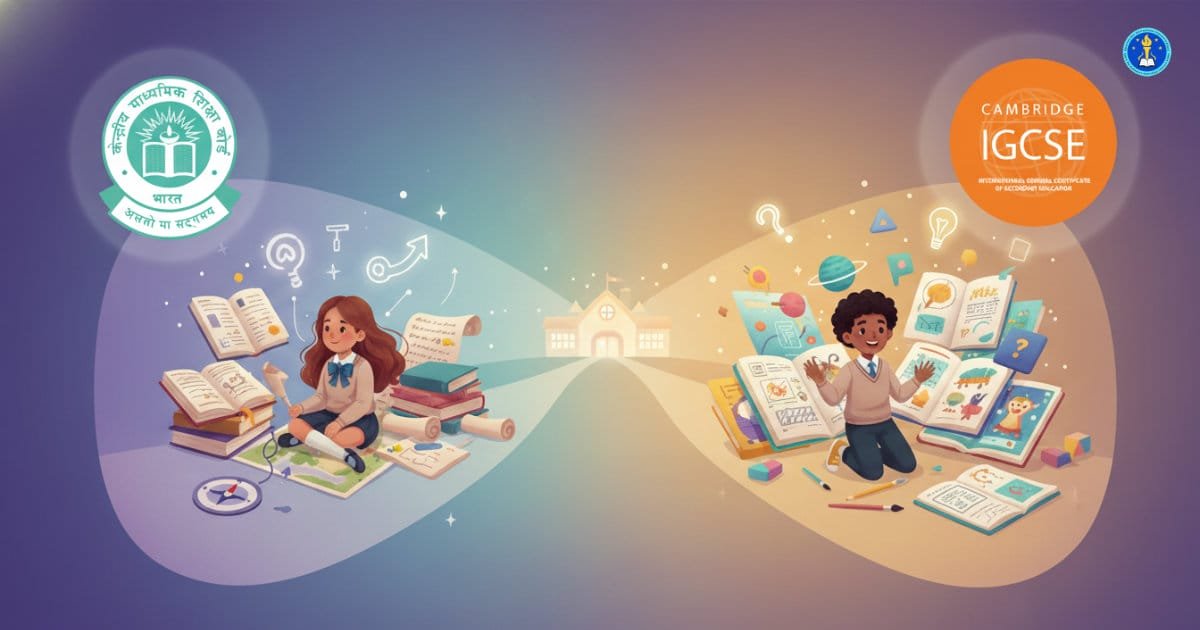
This isn’t about declaring one curriculum superior. Both CBSE and IGCSE produce capable, thoughtful learners when taught well. The question is which pathway aligns with your child’s future and your family’s circumstances. That requires looking beyond general descriptions to understand what each curriculum actually asks of students and where it leads them.
What Each Curriculum Actually Emphasizes
CBSE develops conceptual depth systematically. In mathematics, for instance, Grade 4 students don’t just learn multiplication procedures – they explore why multiplication works, using manipulatives and visual models before moving to abstract problems. Science lessons connect observations to principles. Language instruction balances grammar with composition. The structure builds steadily, with each year’s learning forming the foundation for what follows.
This approach suits children who thrive with clear frameworks and sequential mastery. The curriculum moves deliberately, ensuring students understand concepts thoroughly before advancing. Assessment focuses on demonstrating understanding rather than simply recalling information. Students learn to show their reasoning, explain their thinking, and apply concepts to new situations.
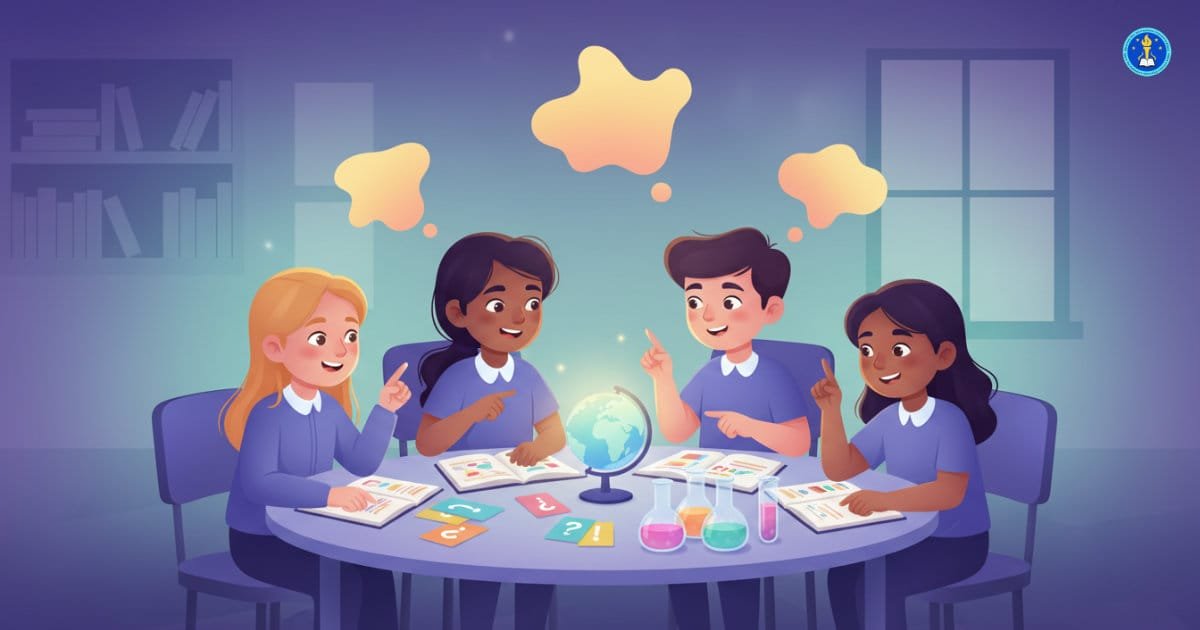
IGCSE encourages analytical independence earlier. Students encounter open-ended questions regularly, learn to evaluate sources, and defend arguments with evidence. A Grade 5 student studying environmental science might compare different conservation approaches, weighing trade-offs rather than memorizing definitions. Literature lessons ask students to interpret texts and support their readings with textual evidence. Mathematics emphasizes problem-solving across contexts.
This curriculum fits children who ask many questions and enjoy exploring topics from multiple angles. It requires comfort with ambiguity and confidence in forming independent judgments. Assessment values critical thinking and the ability to apply knowledge flexibly. Students learn to construct arguments, challenge assumptions, and recognize that many questions have multiple valid answers.
Where These Pathways Lead
CBSE prepares students for India’s educational system specifically. The curriculum aligns with entrance exams for Indian universities and competitive professional programs. Content knowledge is comprehensive and detailed, matching expectations students will face in Indian secondary schools and eventually in exams like NEET or JEE. Cultural content includes Indian history, literature, and social studies.
For families planning to return to India, or considering Indian universities long-term, this alignment matters significantly. The transition from CBSE primary to CBSE secondary is relatively seamless. Students encounter familiar assessment formats and teaching approaches. Subject terminology remains consistent. The learning progression continues without requiring major adjustments.
IGCSE opens pathways to international universities and continued study in systems using British or international frameworks. Students who complete IGCSE typically continue to A-Levels, IB Diploma, or other international qualifications. The curriculum emphasizes skills valued globally: analytical writing, research methods, independent inquiry. Universities worldwide recognize Cambridge qualifications.
This matters for families considering relocation or international career paths. The curriculum travels well across borders. A student moving from Al Kharj to Singapore, London, or Dubai would find familiar approaches and expectations. The emphasis on transferable skills rather than specific national content makes adaptation easier.
The Question of Academic Rigor
Some parents assume one curriculum is inherently more rigorous. That’s imprecise. Both demand intellectual effort; they simply demand different kinds.
CBSE rigor comes from depth and detail. Students master substantial content across subjects. Mathematics problems require multiple steps and careful reasoning. Science study includes extensive factual knowledge alongside conceptual understanding. Language learning develops both technical accuracy and expressive capability. The curriculum doesn’t skip complexity – it builds toward it systematically.
IGCSE rigor emerges through analysis and application. Students must think across contexts, synthesize information from multiple sources, and construct coherent arguments. A history question might require comparing three different historical accounts and evaluating their reliability. A mathematics problem might present real-world data requiring students to determine which analytical approach suits the situation. The curriculum challenges students to think independently rather than follow prescribed methods.
Neither approach is easier. They’re differently demanding. Some students find conceptual depth challenging; others struggle with open-ended analysis. Understanding which type of intellectual work energizes your child matters more than abstract judgments about rigor.
Language and Cultural Considerations
Both curricula at our school incorporate Arabic language instruction and respect for Saudi cultural context, but they differ in how they approach cultural content within academic subjects.
CBSE includes substantial Indian cultural content naturally. Literature selections feature Indian authors. Social studies covers Indian geography, history, and civics. Cultural festivals and traditions appear in various subjects. For families who value maintaining strong cultural connections to India, this integration provides consistent reinforcement. Children learn academic content while staying connected to cultural heritage.
IGCSE takes a more internationally diverse approach. Literature anthologies include authors from various countries. History and geography span global contexts. Cultural content appears but without centering any single national perspective. For families planning international lives or valuing globally diverse exposure, this breadth offers advantages. Children develop comfort with multiple cultural viewpoints early.
Practical Family Considerations
Beyond curriculum philosophy, practical factors influence which choice works better for your family specifically.
Consider your likely timeline in Saudi Arabia. If returning to India is probable within three to five years, CBSE minimizes transition friction. Students move between systems speaking the same educational language. If your career involves frequent international relocation, IGCSE’s broader recognition across countries may serve better. These aren’t absolute rules, but they’re worth weighing alongside academic considerations.
Think about homework support at home. CBSE homework often requires parents to support with specific Indian curriculum knowledge, particularly in mathematics and science. If you studied in Indian schools, you’ll recognize approaches and can guide effectively. IGCSE homework emphasizes independent research and analytical writing. Parents support differently – asking questions that prompt thinking rather than explaining specific methods. Consider which kind of support you’re comfortable providing.
Reflect on your child’s learning style, though I acknowledge this is approximate at young ages. Some children want clear right answers and feel uncertain when questions have multiple valid responses. Others resist prescribed methods and prefer finding their own approaches. Neither preference is better, but they do align differently with curriculum emphases. CBSE provides more structure; IGCSE allows more interpretive freedom.
What Doesn’t Change Between Them
At our school, both curricula share fundamental approaches regardless of formal framework differences. Small class sizes mean every child receives individual attention. Teachers adapt methods to how each student learns best. Inquiry and questioning are valued in both programs. Cultural celebrations include everyone. Pastoral care operates identically. The 1:20 teacher-student ratio applies equally to both curricula.
This matters because the quality of teaching and care often impacts learning more than curriculum structure alone. A skilled teacher makes any curriculum come alive. An attentive community helps any child thrive. The curriculum provides the map, but the daily experience of learning – the relationships, the support, the environment – shapes outcomes powerfully.
We’ve watched siblings in different curricula both flourish. We’ve seen families choose CBSE for older children and IGCSE for younger ones based on each child’s temperament. There’s no universal right answer, only the answer that fits your child’s needs and your family’s path.
Making the Decision
Here’s what I suggest to families wrestling with this choice: Start with where you’re likely heading, not where you are now. If India is your destination within five years, CBSE simplifies that transition significantly. If you’re building an internationally mobile life, IGCSE travels better across borders.
Then consider your child. Not who they might become eventually, but who they are now. Do they ask “why” constantly or prefer clear instructions? Do they enjoy debating different viewpoints or want to know the correct answer? Do they think in pictures and stories or in sequences and procedures? These aren’t predictive, but they suggest which curriculum’s approach might feel more natural to them initially.
Finally, remember that primary school curriculum matters less than secondary and beyond. At ages five through eleven, children are building foundational skills and learning how to learn. Both CBSE and IGCSE accomplish this when taught well. The critical years for curriculum-specific preparation come later. Your choice now isn’t permanent, though switching curricula mid-stream requires adjustment.
If you’re still uncertain after considering these factors, that’s understandable. This decision matters, and ambiguity around important decisions is normal. We’re available to discuss your specific situation in detail – your child’s temperament, your family’s plans, your concerns about either pathway. Sometimes talking through the particulars clarifies what research alone cannot.
The goal isn’t choosing the “best” curriculum abstractly. It’s choosing the curriculum that best serves your child and honors your family’s path. That’s a question only you can answer, but we can help you think it through.