
Two Pathways, One Purpose
Dual Curriculum Advantage
Two Pathways, One Standard of Excellence
Dual Curriculum, One Purpose
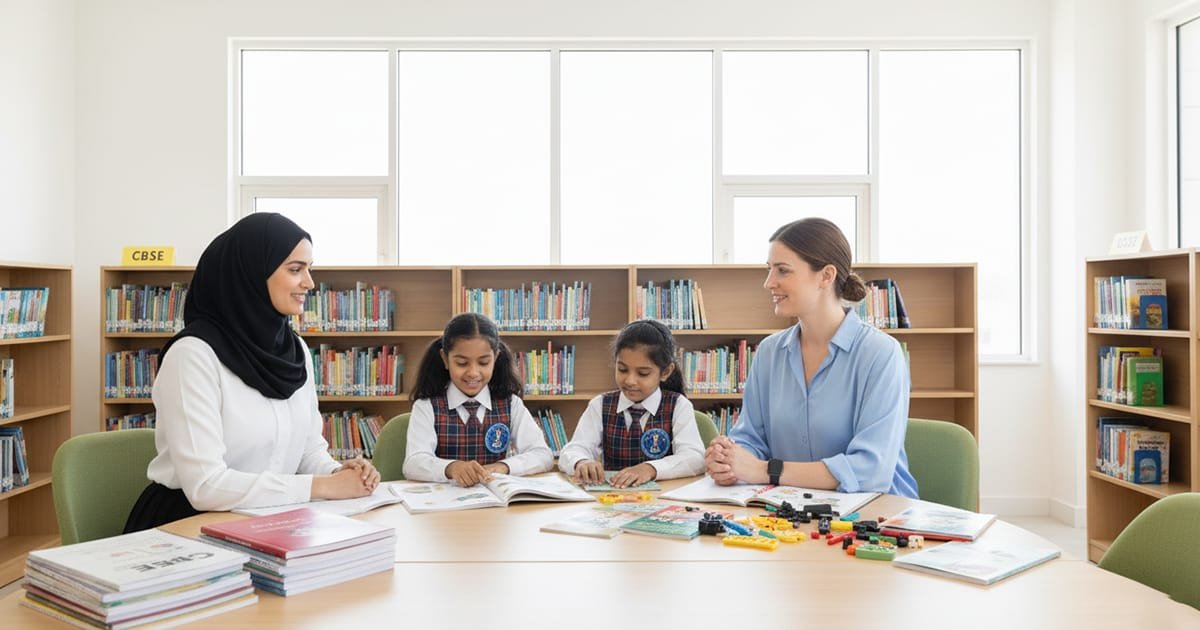
Quantum Rise International School offers both CBSE (Central Board of Secondary Education) and IGCSE (International General Certificate of Secondary Education) curricula from Kindergarten through Grade 6, giving families in Al-Kharj the flexibility to choose the academic pathway that best aligns with their child's future.
IGCSE: A Global Learning Pathway
IGCSE is suited for families considering international universities or relocating to other countries. It encourages independent thinking, research skills, and a global perspective on subjects ranging from literature to environmental science. The curriculum emphasizes depth over breadth, with a strong focus on language proficiency and analytical reasoning.
IGCSE Fee Structure
CBSE: A Strong Academic Foundation
CBSE is ideal for families planning to return to India or pursue higher education within the Indian system. It emphasizes conceptual understanding, particularly in mathematics and science, and integrates Indian cultural and linguistic content. The curriculum is structured, progressive, and widely recognized across India and the Middle East.
CBSE Fee Structure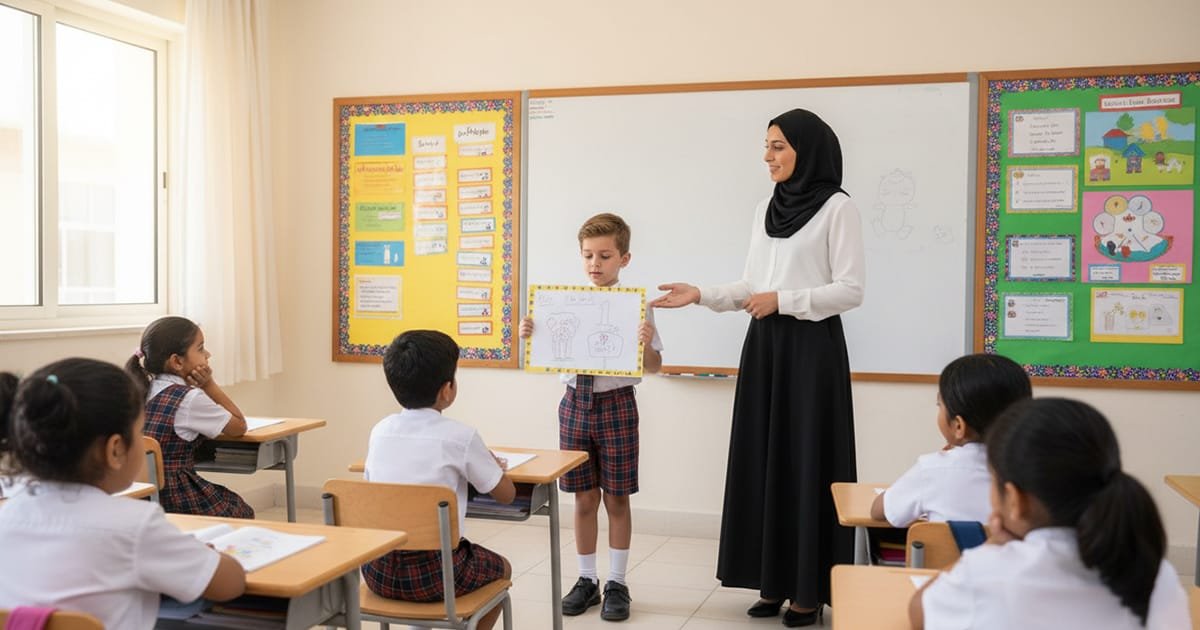
Shared Learning Approach
Both curricula share a common foundation at Quantum Rise in Al-Kharj: active learning, inquiry-driven pedagogy, and a commitment to developing well-rounded individuals. Whichever path you choose, your child will be taught by experienced educators who value understanding over rote learning.

A Philosophy Rooted in Children
Our founder, Mrs. Padmini Nair, often reminds our teachers: "If a child isn't learning the way you're teaching, teach the way the child learns." This philosophy — flexible, responsive, and deeply human — guides every decision we make at Quantum Rise International School in Al-Kharj.
CBSE Textbook Approval Notice
The implementation of the CBSE curriculum at our school follows the regulations of the Saudi Ministry of Education. We are currently awaiting formal approval for the prescribed CBSE textbooks. Until approval is granted, teaching for CBSE classes will be supported through school-provided learning materials aligned with CBSE and IGCSE standards.
While we cannot provide an exact date due to regulatory processes, we anticipate the textbook approval from the MoE to be completed within the next 2-3 months. We are aiming for the approval process to be completed by December 2025.
Growing Values That Shape a Life
Commitment
Respect
Integrity
Responsibility
Compassion
Driven by a deeper purpose
Admission Enquiry
Please share your details so we can guide you through the admission steps and answer any questions you may have.
We look forward to welcoming you to Quantum Rise!
Questions Families Ask
Find straightforward answers to the most common queries about our curriculum options, admission steps, daily routines, and school practices, helping you feel confident and informed as you explore Quantum Rise for your child.

Which grades does Quantum Rise currently offer?
We offer classes from Kindergarten (Nursery, LKG, UKG) to Grade 6. The school expands each year as our students move up.
Which curriculums do you offer?
Families can choose either CBSE or IGCSE, depending on their child’s learning style and future plans. Both pathways follow steady routines, strong literacy, and hands-on learning.
Are the teachers experienced in CBSE and IGCSE methods?
Yes. Our faculty includes teachers trained in Indian and international curricula, supported by senior mentors who guide planning, assessments, and classroom practice.
Do you have students from different nationalities?
Yes. While many families are from India, we also welcome children from other countries, creating a diverse and inclusive school community.
How do you help children settle in, especially the younger ones?
We follow a gentle settling routine that includes shorter first-day timings, parent-teacher check-ins, and familiarisation activities to help children adjust comfortably.
Is school transportation available?
Yes. We offer GPS-enabled buses with trained supervisors. Routes cover major residential areas in Al-Kharj.
How are students assessed?
Assessment is ongoing and age-appropriate. Teachers observe classwork, maintain portfolios, give feedback, and conduct periodic written checks without overwhelming students.
How do you communicate with parents?
We share weekly notes, monthly learning summaries, and host regular parent meetings. Teachers also update parents directly when a child needs support or encouragement.
How large are the classes?
Our classes follow a maximum 1:20 teacher–student ratio, allowing teachers to notice each child and offer personalised support.
Parent Voices
Honest impressions from our community
Thoughtful feedback from families who experience our classrooms, routines, and care each day. Their voices reflect the trust, warmth, and steady growth that define our school community.
I used to wake my daughter at 5:15 just to get her ready for the Riyadh bus. The poor child would nap in the afternoons instead of playing. Now we walk to school in seven minutes. She comes home and tells me stories about how she watered the plants and helped a friend zip her bag. That peace on her face in the morning, I cannot explain. I feel like we got our child back.

Fatima Ali
Stay-at-Home Mom
We came from a small village school in the UK, so I was worried about how my daughter would settle here. The pace felt different at first, but the teachers took time to understand how she learns. She likes quiet corners and slow starts. They gave her that. She now reads every evening and explains things she learned in class as if she’s teaching me. That’s when I knew she was comfortable.

Emma Richardson
Logistics Supervisor
We moved from Riyadh to Al-Kharj last year. In his old school, my son said he felt “small” all the time. Here, he brings home drawings and little science notes and says, “See what I found out.” It’s not fancy, but it feels like someone sees him.

Arjun Desai
IT Support
My boy is a hands-on kid. Sitting still isn’t his strength. At his last school in Riyadh, he was always in trouble for fidgeting. Here, they let him work with blocks, charts, and experiments. The teacher even told me, “Movement helps him think.” That was the first time anyone said something positive about his restlessness. Makes a big difference.

Daniel Hughes
Mechanical Engineer
I am a new mom. I didn’t know anything about schools. I only wanted a place where my small boy would not feel scared. In the first week, he cried. I cried also. But the teacher sat with him, showed him a picture book about fish, and sang softly. By the third week, he ran inside without looking back. That day I felt relief like nothing else.

Priya Menon
Registered Nurse
I have twins. One learns quickly, one needs time. Earlier schools always compared them. Here, they treat them as two separate children. One does reading cards; the other still does picture–sound games. Nobody made me feel worried or embarrassed. That is rare.

Hassan Karim
Floor Manager